
You can enhance your colloidal stability assessments by integrating zeta potential analysis with particle size measurements, microscopy, and spectroscopy electrophoretic mobility. This combined approach lets you distinguish true surface charge changes from size artifacts, correlate morphology and chemical heterogeneity with electrostatic behavior, and improve predictive formulation adjustments. Leveraging data fusion and machine learning on these multimodal datasets offers a more thorough understanding of particle interactions and stability trends. Advancing your characterization strategy this way opens pathways to more precise optimization and innovation.
Understanding Zeta Potential and Its Role in Colloidal Stability
Although you might not immediately recognize its importance, zeta potential is a critical parameter for evaluating colloidal stability. It quantifies the electrokinetic mobility of particles suspended in a fluid, directly reflecting the balance of repulsive and attractive forces. By measuring zeta potential, you gain insight into the surface charge characteristics that govern particle interactions. Surface conductivity influences the accuracy of these measurements, as it affects the electrical double layer surrounding each particle https://laballiance.com.my/. Understanding these factors allows you to predict whether particles will aggregate or remain dispersed. This knowledge empowers you to optimize formulations, ensuring freedom from unwanted sedimentation or flocculation. Mastering zeta potential analysis equips you with precise control over colloidal systems, an essential step toward achieving stable and efficient material performance.
Combining Particle Size Analysis With Zeta Potential Measurements
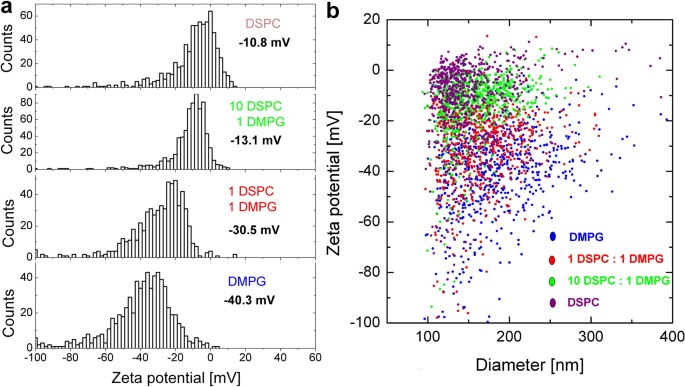
Building on your understanding of zeta potential’s role in colloidal stability, integrating particle size analysis provides a more complete characterization of your system. Particle size directly influences electrostatic screening effects; larger aggregates alter the effective surface charge distribution and modify the thickness of hydration layers surrounding particles. By simultaneously measuring size and zeta potential, you gain insight into how particle aggregation dynamically impacts surface charge and interparticle forces. This dual approach allows you to discern whether changes in zeta potential result from true surface charge variations or are artifacts caused by size-dependent electrostatic screening. Accurate size distribution data also help in interpreting zeta potential shifts during formulation or processing adjustments, enabling optimized control over colloidal stability. Ultimately, combining these techniques equips you with a robust framework to predict system behavior under varying environmental conditions.
Utilizing Microscopy Techniques to Complement Surface Charge Data
When you integrate microscopy techniques with zeta potential data, you can directly correlate particle morphology with surface charge characteristics. This approach enhances the accuracy of visualizing particle interactions and charge distribution. By combining these methods, you gain a more thorough understanding of the sample’s physicochemical properties.
Correlating Morphology and Charge
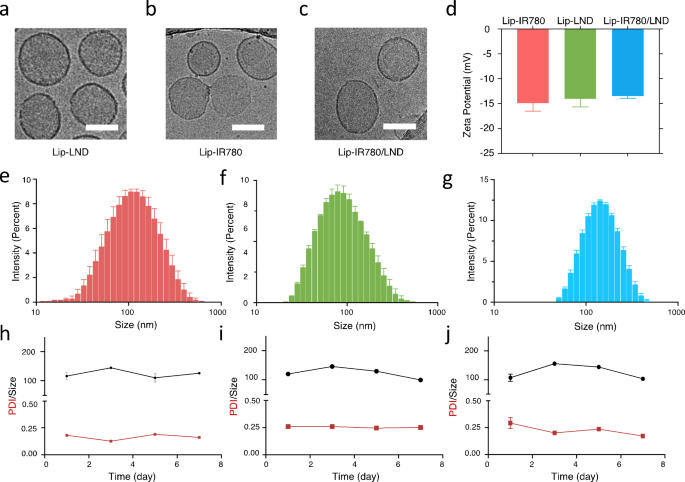
By integrating microscopy techniques with zeta potential measurements, you can gain a more thorough understanding of how particle morphology influences surface charge characteristics. Detailed analysis of aggregate morphology through electron or atomic force microscopy reveals structural features that directly affect surface roughness, which in turn impacts the distribution and magnitude of zeta potential values. You’ll notice that irregular or highly rough surfaces often exhibit heterogeneous charge distributions, complicating predictions of colloidal stability. Correlating these morphological insights with quantitative zeta potential data enables precise interpretation of particle interactions in suspension. This combined approach frees you from relying solely on indirect charge measurements, allowing a nuanced evaluation of how physical structure modulates electrostatic behavior. Ultimately, this synergy empowers informed decisions in formulation design and process optimization.
Enhancing Visualization Accuracy
To enhance visualization accuracy, integrating advanced microscopy techniques with zeta potential data provides a clearer, more detailed representation of surface charge distributions. You’ll want to employ contrast enhancement methods to delineate subtle charge variations that standard imaging might overlook. Accurate color calibration is essential to assure that the visual data correctly corresponds to quantitative zeta potential measurements, enabling precise interpretation. By combining high-resolution microscopy with calibrated color mapping, you can visually correlate morphological features and electrostatic properties without ambiguity. This approach minimizes artifacts and improves reproducibility, granting you freedom to analyze complex surfaces confidently. Ultimately, enhancing visualization accuracy through these complementary techniques empowers you to make more informed decisions in material characterization and quality control.
Integrating Spectroscopic Methods for Enhanced Particle Characterization
Although zeta potential measurements provide critical insights into particle surface charge and stability, integrating spectroscopic methods can markedly enhance the depth and accuracy of particle characterization. By combining spectral mapping and interface spectroscopy, you gain a multidimensional understanding of particle composition and surface chemistry. This fusion allows you to:
- Precisely correlate surface charge variations with chemical heterogeneity
- Detect subtle interfacial interactions undetectable by zeta potential alone
- Map spatial distribution of functional groups impacting particle behavior
- Enhance analytical resolution for complex multi-component systems
Leveraging these techniques empowers you to analyze particles with higher specificity and freedom, enabling tailored modifications and better predictive control over stability and performance in diverse applications.
Case Studies Demonstrating Multi-Technique Approaches
When you combine zeta potential analysis with complementary spectroscopic techniques, you unleash a more complete understanding of particle systems, as demonstrated in several case studies. For instance, tracking surface interactions via infrared spectroscopy alongside zeta potential measurements reveals adsorption mechanisms affecting colloidal stability. Another study correlates shifts in zeta potential with rheological behavior changes, clarifying how electrostatic forces influence viscosity and flow properties. By integrating these datasets, you gain insight into the interplay between particle charge distributions and macroscopic material performance. This multi-technique approach lets you pinpoint formulation parameters that optimize stability and functionality, providing freedom to tailor systems precisely. Embracing such analytical synergy empowers you to decode complex particle behavior beyond what isolated methods reveal, ultimately advancing both research and practical applications in material science.
Best Practices for Data Interpretation and Formulation Optimization
You’ll need to correlate zeta potential data with particle size distributions to identify stability trends effectively. Integrating multimodal datasets allows for a thorough understanding of formulation behavior under varying conditions. From there, optimizing formulation parameters becomes a targeted process driven by precise, data-informed decisions.
Correlating Zeta With Size
Since zeta potential and particle size are intrinsically linked, understanding their correlation is essential for accurate data interpretation and effective formulation optimization. You’ll need to analyze how electrophoretic mobility influences particle aggregation, which directly affects size distribution. Here’s what to focus on:
- Assess changes in zeta potential to predict aggregation tendencies impacting particle size.
- Correlate electrophoretic mobility shifts with size alterations for stability insights.
- Use simultaneous measurements to detect size increases due to aggregation precisely.
- Interpret combined data to optimize formulations, ensuring dispersions remain stable and free-flowing.
Multimodal Data Integration
Building on the relationship between zeta potential and particle size, integrating multiple data modalities offers a more thorough understanding of colloidal stability and formulation behavior. You’ll leverage data fusion techniques to combine zeta potential readings, particle size distributions, and complementary characterization outputs into a unified dataset. This holistic approach reveals nuanced interactions that single modalities might miss. Applying machine learning algorithms to fused data enables you to identify complex patterns and predictive markers with enhanced accuracy. You can then interpret results with greater confidence, optimizing your formulations based on multidimensional insights. By embracing multimodal data integration, you gain a robust analytical framework that supports informed decision-making, accelerates innovation, and grants you the freedom to tailor formulations precisely to your performance criteria.
Optimizing Formulation Parameters
Optimizing formulation parameters requires a strategic approach to data interpretation that balances empirical evidence with theoretical understanding. When integrating zeta potential analysis, you must consider how buffer composition influences ionic strength and pH, affecting particle stability. Surfactant selection is equally critical, as it modulates surface charge and interfacial properties. To enhance your formulation, focus on:
- Systematically varying buffer composition to map its impact on zeta potential.
- Selecting surfactants based on charge type and concentration for optimal stabilization.
- Correlating zeta potential shifts with particle aggregation tendencies.
- Leveraging complementary characterization data to validate formulation performance.
Conclusion
By integrating zeta potential analysis with complementary techniques like particle size measurement, microscopy, and spectroscopy, you gain a thorough understanding of colloidal stability and surface properties. This multi-faceted approach enhances data accuracy and formulation optimization, enabling more informed decisions in material design. Applying these combined methods systematically guarantees robust characterization, ultimately improving product performance and stability in your research or industrial applications.


